ChemTool for businesses

For workshops, storage and production: fast SDS access via QR code – no login, no installation. Assignments (workplace/storage) and quantities make the real situation visible, from central storage to the point of use.

Language‑guided access: the business sees SDS in the company/user language (if available in the inventory and registered for the organization).

Request a demo QR codes List & quantities

QR codes – ideal for workshop, storage and production

Locations can be fixed or mobile (service vehicle, construction site, cleaning cart). The QR code opens the SDS directly in the browser – on any internet‑capable device (if coverage is available).

See examples →

Assignments & quantities

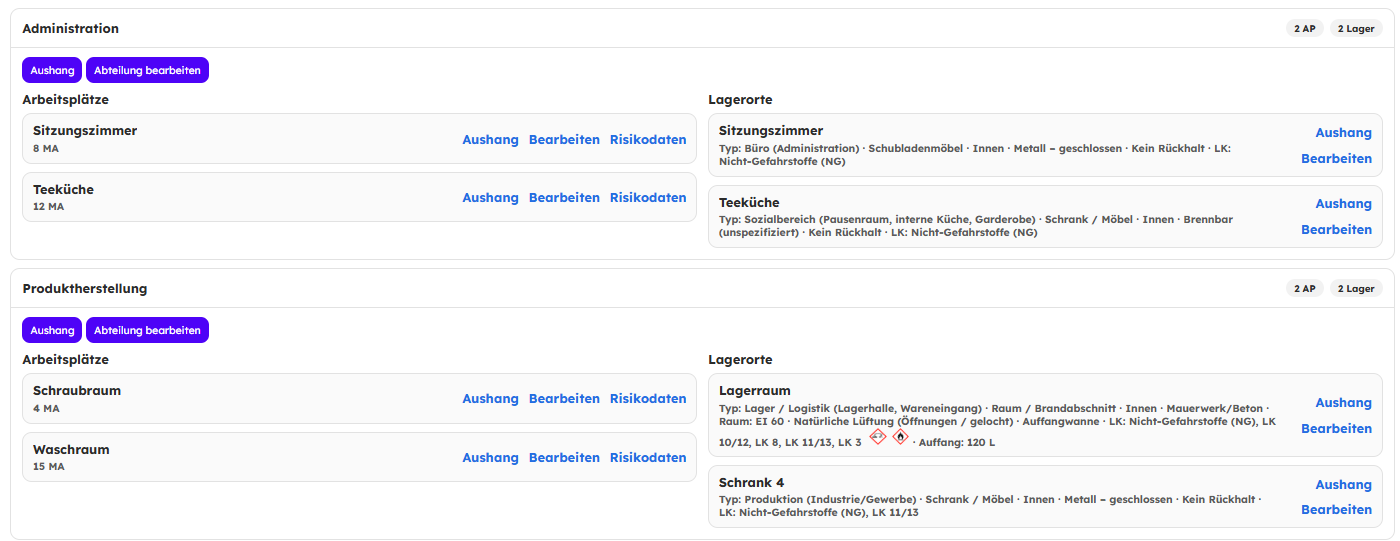
Workplaces & storage locations (modular)

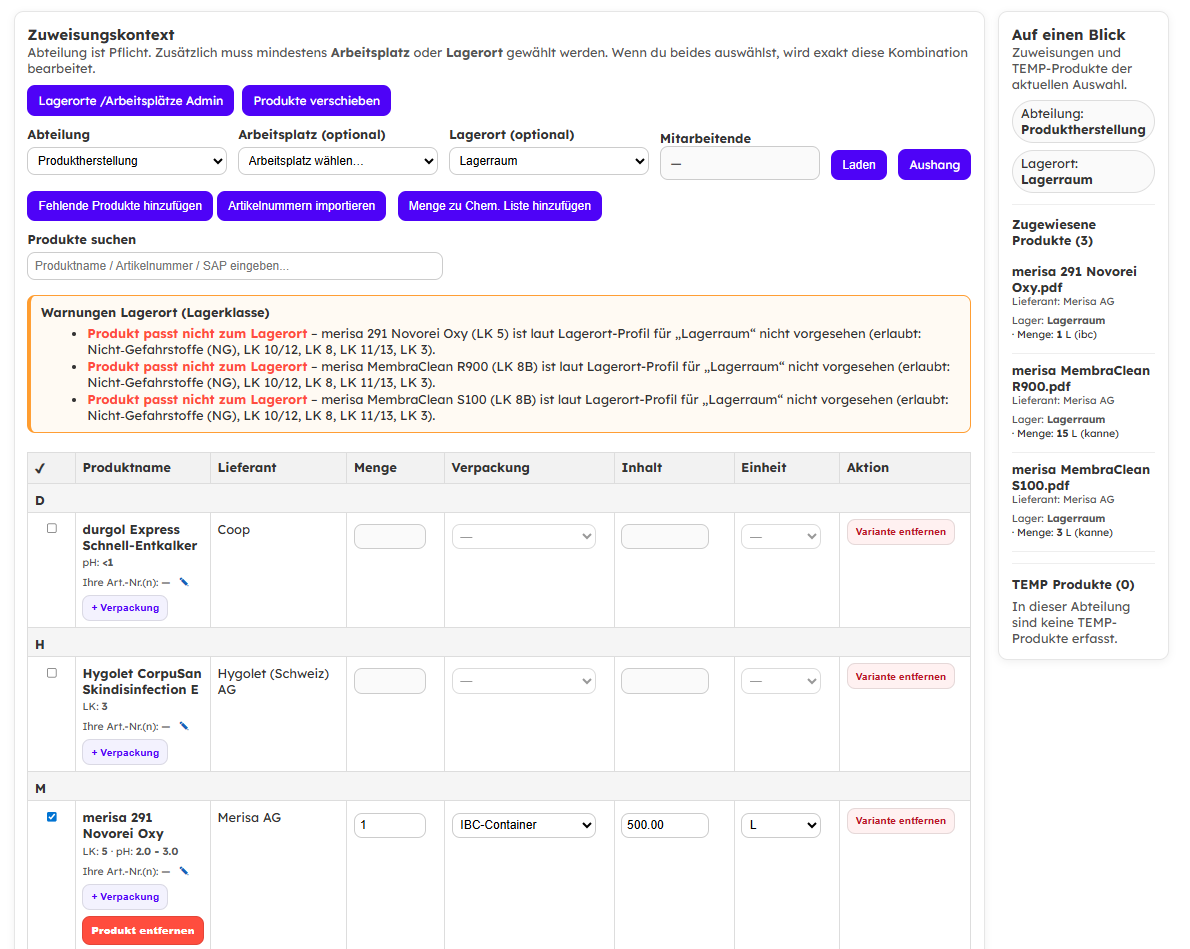
  • Departments, workplaces and storage locations can be named freely.
  • Already assigned products are shown and marked.
  • Create “missing” products during assignment (name + supplier is enough).
  • The purchase supplier per product is stored and can be changed – useful when you haven’t reordered for a long time or when assortments change.
  • This makes it clear which supplier should provide the up‑to‑date SDS (unless it comes directly from the manufacturer/importer).

Move products

  • Move full or partial quantities (e.g. a site that changes).
  • Useful for reorganizations or layout changes.

Hazardous substance list with quantities

The list shows relevant information (pictograms, H phrases, etc.) and indicates quantities per workplace/storage as well as the total quantity across the organization. It supports organization, internal checks and measure planning – and also helps purchasing and production.

See the list →

Work instructions & training documents (automatic)

Based on the products assigned to a workplace, ChemTool automatically creates work instructions and training documents. Create single documents or generate them in bulk; output as PDF (download) or as images.

Preview →

Warnings & storage conditions

Warnings can appear already during assignments (e.g. product not matching the storage profile, acid/base conflicts by pH, etc.). They can be derived from SDS data, risk analysis and storage conditions.

See examples →

Suva risk analysis – check points

Risk analysis according to Suva (5×5/STOP) with check points: young worker/maternity protection, limit values (MAK/KZGW), threshold quantities (StFV/OPAM) and exposure scenarios. Note: screenshots on the website are examples and should not be copied as‑is.

Risk analysis →

Request a demo